
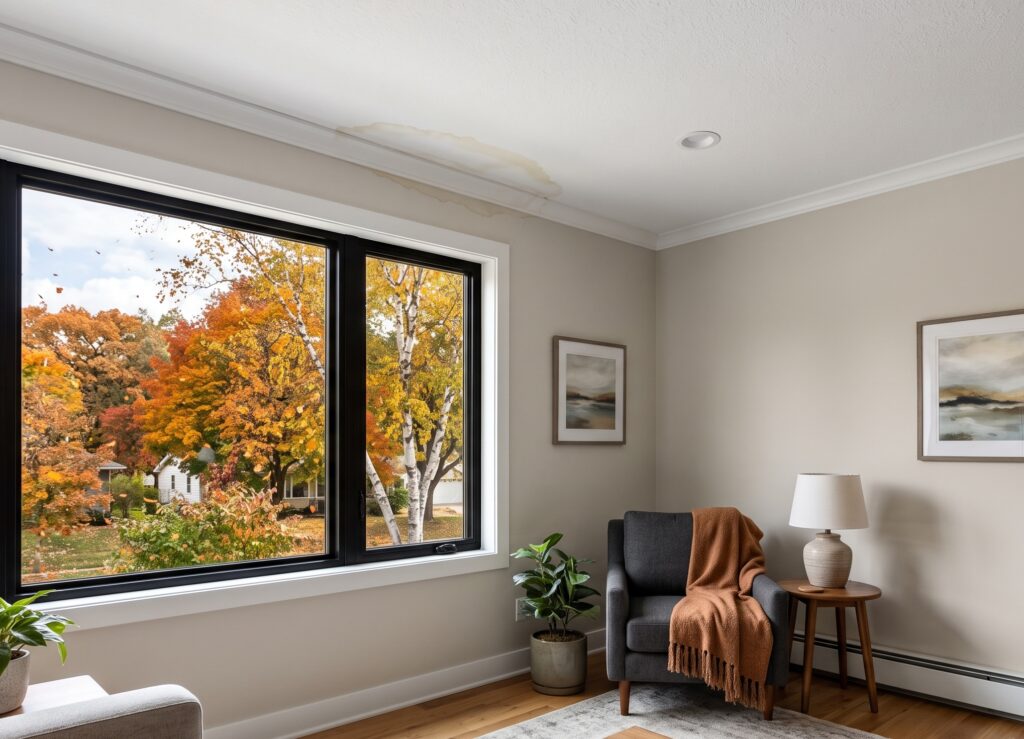
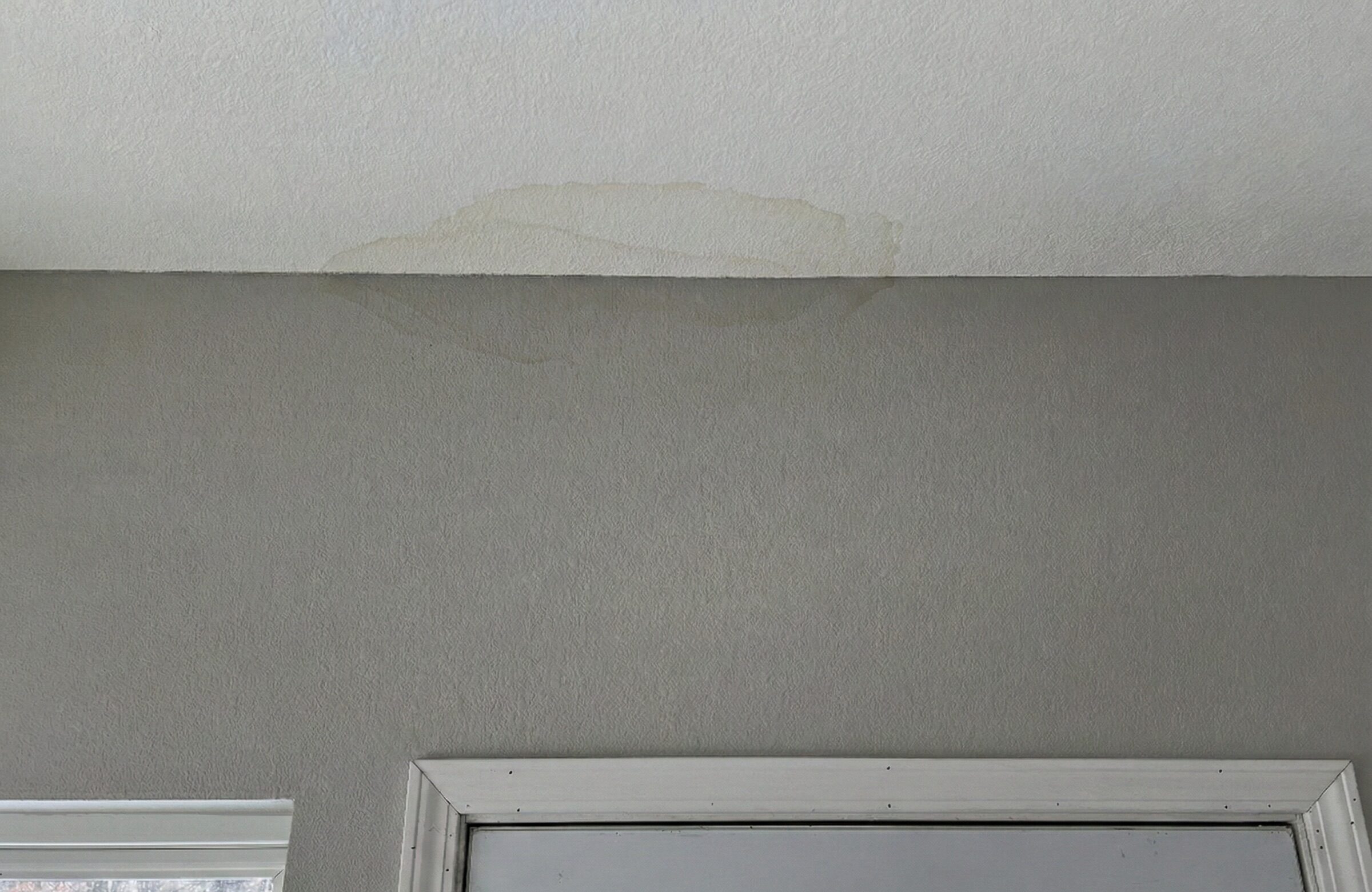
You’re sitting on the couch on a crisp fall evening, glance up, and there it is: a yellowish-brown water stain on the ceiling that you’re pretty sure wasn’t there last month. Maybe it’s near a light fixture. Maybe it’s a wet spot along the edge where the ceiling meets an outside wall. Maybe there’s a small bubble in the paint or a patch of drywall that feels a little soft.
Most homeowners assume the worst: the roof is leaking. Sometimes it is. But for homes in Fargo, Moorhead, and West Fargo, and out through Minnesota lakes country around Detroit Lakes, Fergus Falls, and Park Rapids, a new ceiling stain in early fall very often has nothing to do with shingles or flashing. The water is coming from inside your own house, and it’s collecting in your attic.
Here’s how that happens, why this time of year makes it worse, and what you can do about it.
Why Is There a New Water Stain on My Ceiling in the Fall?
Fall in the Red River Valley and lakes country brings a pattern most of us know well. Afternoons still climb into the 60s or 70s, then temperatures drop into the 30s or 40s overnight. Those 30- to 40-degree swings feel refreshing, but they create ideal conditions for condensation in an attic that isn’t properly sealed.
Your living space is full of warm, moist air. Everyday life adds a surprising amount of water vapor to a home: showers, cooking, laundry, houseplants, even breathing. A typical family can add several gallons of moisture to indoor air every week.
Warm air rises and wants to move up and out of the house through any gap it can find. That upward push is called the stack effect, and it gets stronger as the gap between indoor and outdoor temperatures grows. On a cool fall night, when the furnace kicks on for the first time and the outdoor air has dropped into the 30s, your house is pushing warm, humid air toward the attic harder than it has in months.
Meanwhile, your attic is cooling down fast. The roof deck, the plywood or OSB sheathing under your shingles, loses heat quickly on clear nights and can drop a few degrees below the outdoor air temperature.
When warm, moist air reaches that cold roof deck, it hits its dew point and turns into water. It’s the same thing you see on the outside of a cold glass of iced tea in July. In your attic, it’s happening on the underside of your roof, on nail tips, and on framing, night after night.
What Causes Condensation in the Attic to Turn Into a Ceiling Stain?
A little condensation that dries out the next afternoon might not cause much trouble. The problem is that fall attic condensation tends to build on itself.
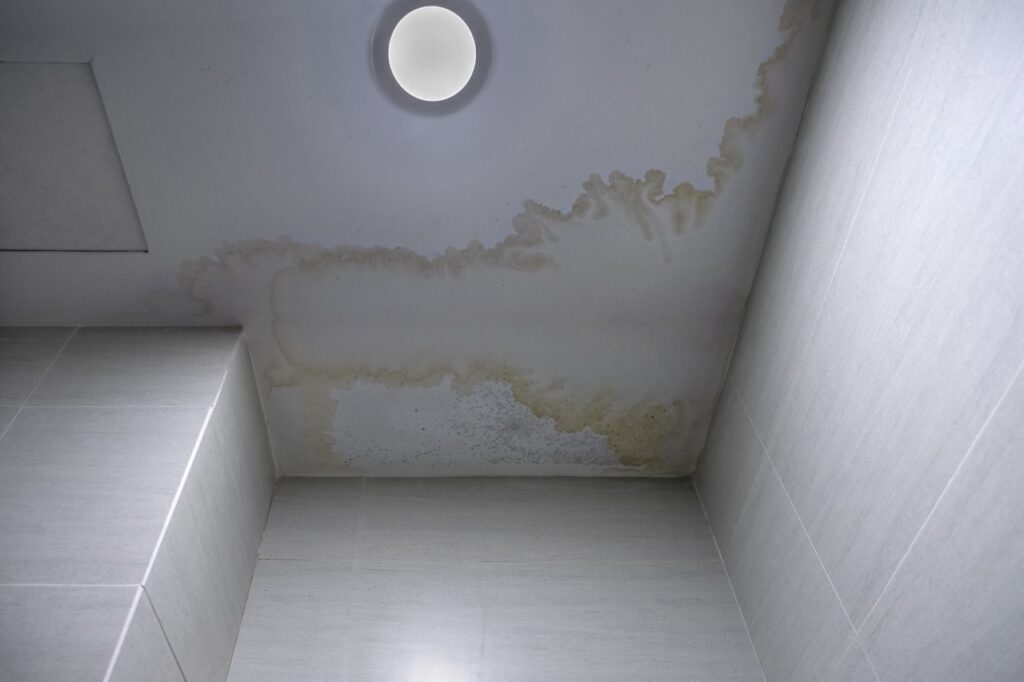
Droplets form on the roof sheathing and on the tips of roofing nails that poke through into the attic. They drip onto the insulation below. Damp insulation loses much of its ability to slow heat loss, which makes the ceiling below colder, which invites even more condensation. Over time, the moisture soaks through the insulation and into the top of the drywall.
That’s your water spot.
As temperatures keep dropping, that moisture freezes into frost in the attic, coating the roof deck and nails. It can build quietly for weeks. Then a warm, sunny day comes along, everything melts at once, and homeowners are suddenly dealing with what looks like a serious roof leak, sometimes in several spots at the same time.
Where Is the Warm Air Getting Into My Attic?
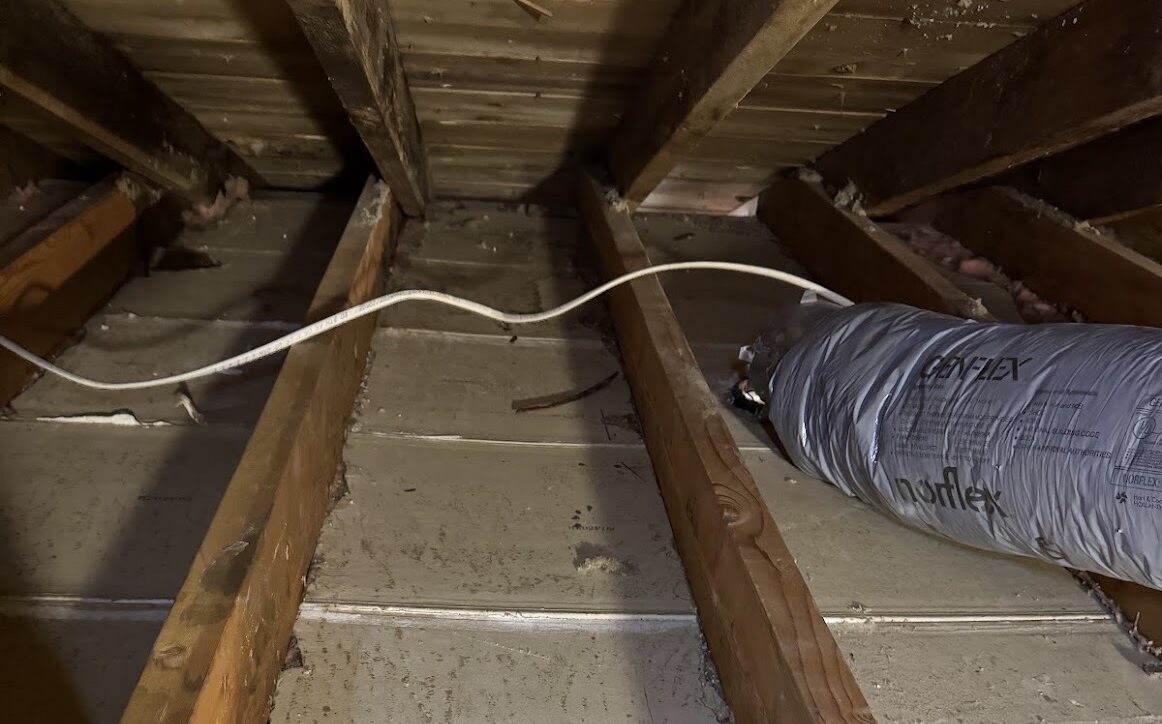
Attic condensation almost always traces back to warm indoor air getting into a space where it doesn’t belong. The ceiling between your living space and attic should act as a barrier. In many homes, especially older homes and lake cabins that have been converted to year-round living, that barrier has a lot of holes in it.
Common trouble spots include:
- Recessed can lights. Many older recessed fixtures aren’t airtight. Each one can act like a small chimney. If your stain is right next to a can light, it’s a strong suspect.
- Attic access hatches. A hatch or pull-down ladder without weatherstripping and insulation is often one of the largest single openings into the attic.
- Plumbing vents and wiring holes. Every pipe and wire running into the attic passes through a hole in the ceiling or top plate. These penetrations are one of the most common areas where we find missing air sealing, and even small gaps add up across a whole house.
- Bathroom exhaust fans. A bath fan should move humid air all the way outside. If the duct has shifted over time or isn’t fully connected to the exterior, that shower steam ends up on your insulation and roof deck instead. This is one of the most common causes of attic moisture we find.
- Chimney and flue chases. Gaps around chimneys and furnace flues can let large volumes of warm air escape upward.
- Top plates of interior walls. The tops of interior walls are often open to the attic, letting warm air rise through wall cavities and out.
Does Attic Ventilation Matter?
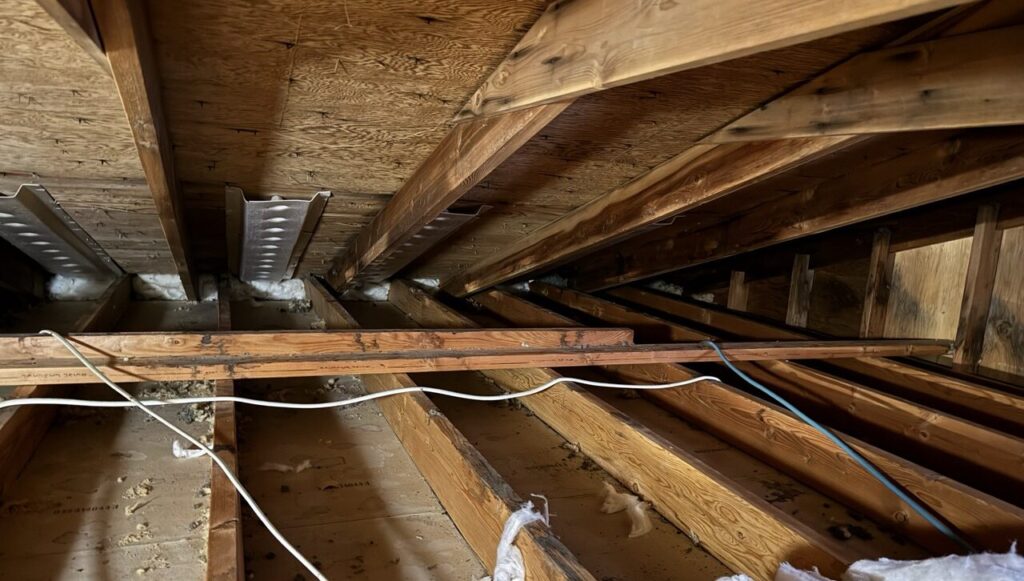
Yes. Your attic works as a system, and air sealing, insulation, and ventilation each have a job to do. When that system is functioning properly, the ceiling keeps warm air in the house, insulation keeps heat from escaping, and outdoor air moves in through soffit vents near the eaves and out through vents near the roof peak, carrying moisture away before it condenses.
Over time, insulation can settle or shift and end up covering soffit vents. When that happens, air can’t move through the attic properly, and condensation gets worse. Ventilation alone won’t fix an attic with major air leaks, though. If warm, wet air pours in faster than the vents can move it out, you’ll still end up with water on the roof deck.
Signs of Moisture Problems in Your Attic
A ceiling stain is usually a later symptom. If you’re comfortable safely looking into your attic (stay on the joists and never step between them), check for:
- Dark staining or discoloration on the underside of the roof sheathing
- Rusty nail tips poking through the roof deck, or rust-colored marks on the insulation below
- Damp, matted, or compressed insulation in certain areas
- Frost on nails or sheathing on cold mornings
- A musty smell or visible mold on wood surfaces
- Water stains around the attic hatch or on framing near bath fans
Inside the home, watch for peeling ceiling paint, especially in upper-floor bedrooms and bathrooms, and ice dams along the roof edge once winter arrives. Ice dams come from a closely related problem: heat escaping into the attic and melting snow on the roof.
Is It a Roof Leak or Attic Condensation?
It’s not always the attic, and it’s worth being honest about that. Ceiling stains can also come from a roof leak, a failed pipe boot, damaged chimney flashing, or a plumbing leak from an upstairs bathroom.
A few clues can help. Stains that show up after heavy rain point toward the roof. Stains that appear after a string of cold nights, after long hot showers, or on a sunny day following a cold snap point toward condensation. Stains in several spots, especially near light fixtures or bath fans, also lean toward attic air leakage.
The only way to know for sure is an attic inspection.
How Do You Fix Attic Condensation?
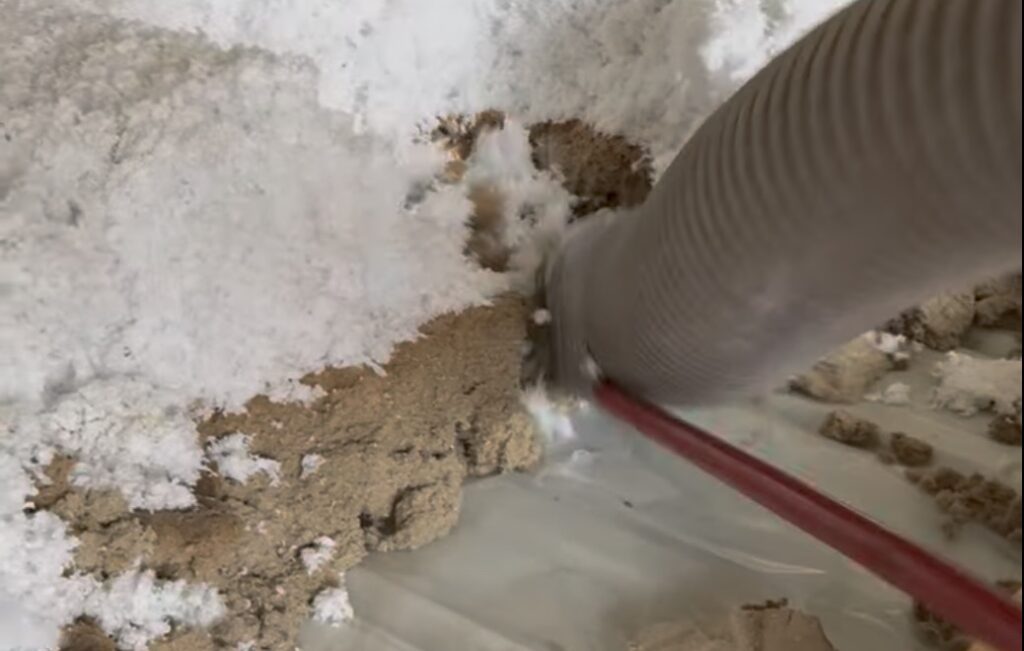
Painting over the stain might make the ceiling look better for a while, but it will come back if the source isn’t addressed. A lasting fix usually involves these steps, in this order:
- Find and seal the air leaks around can lights, pipes, wires, chimneys, and top plates, and weatherstrip and insulate the attic hatch.
- Correct bath fan venting so every exhaust fan is ducted all the way outside.
- Remove damaged insulation if needed. Wet, moldy, or compressed insulation doesn’t perform well and can hide ongoing problems. Removing it is often the only way to properly access and seal the ceiling below.
- Restore proper ventilation with baffles at the soffits so air flows freely from eaves to peak.
- Add insulation to the right depth, using blown-in insulation or spray foam where it makes sense, to keep the ceiling warm and the attic cold.
Air sealing comes first because insulation slows heat, but most types don’t stop air. Warm, moist air will pass right through it and keep causing problems.
Frequently Asked Questions
Why is there a wet spot on my ceiling but it hasn’t rained?
If there’s no recent rain, the moisture is likely coming from inside your home. Warm, humid air leaking into the attic condenses on the cold roof deck and drips onto insulation and drywall.
Can attic condensation cause mold?
Yes. Repeated moisture on roof sheathing and framing can lead to mold growth, which is one reason it’s worth addressing early.
Is frost in the attic normal in winter?
A small amount can happen on very cold nights, but heavy or recurring frost usually means warm air is leaking into the attic or ventilation isn’t working as it should.
When should I get an attic inspection?
If you notice a new ceiling stain, frost on attic nails, ice dams, or uneven temperatures between rooms, an attic inspection can identify the cause. Fall is a good time, before cold weather makes the problems worse.
Schedule a Free Attic Inspection Before Winter

Fall is the right time to deal with attic moisture. Problems are just starting to show, the attic is still comfortable to work in, and addressing them now can prevent frost buildup, ice dams, and bigger water damage once the snow flies.
Polar Insulation has been helping homeowners with attic insulation, air sealing, and insulation removal since 2012, serving Fargo, Moorhead, West Fargo, and the surrounding area, along with Minnesota lakes country including Detroit Lakes, Fergus Falls, and Park Rapids. If you’ve noticed a new stain on your ceiling, or just want to know what’s going on above your head before winter, we offer free attic inspections. We’ll take a look, show you what we find, and give you honest answers and a thorough plan to fix the cause, not just the symptom.
Call us today to schedule your free attic inspection.