
Most people never think about attic insulation removal — until something forces the issue. A ceiling stain shows up. The upstairs bedroom won’t hold heat in January. Icicles the size of baseball bats hang off the eaves. Or you hear something scratching around up there at two in the morning.
By the time you notice the signs, the damage is usually already underway. And here’s what a lot of homeowners don’t expect to hear: adding more insulation isn’t always the answer. Sometimes the old insulation has to come out first. Knowing when you need insulation removal — and when you don’t — can save you money, protect your health, and keep your home comfortable through a Red River Valley winter.
We’ve spent over a decade in attics across the Fargo-Moorhead area, central North Dakota, and the Minnesota Lakes Area — old farmhouses, ’70s ranches, lake cabins, and everything in between. We’ve seen what freeze-thaw cycles do to an attic, and we’ve learned that doing the job right sometimes means starting with a clean slate. Here’s everything you need to know about attic insulation removal: when it’s necessary, why it matters, your options, and what it costs.
What Is Attic Insulation Removal?
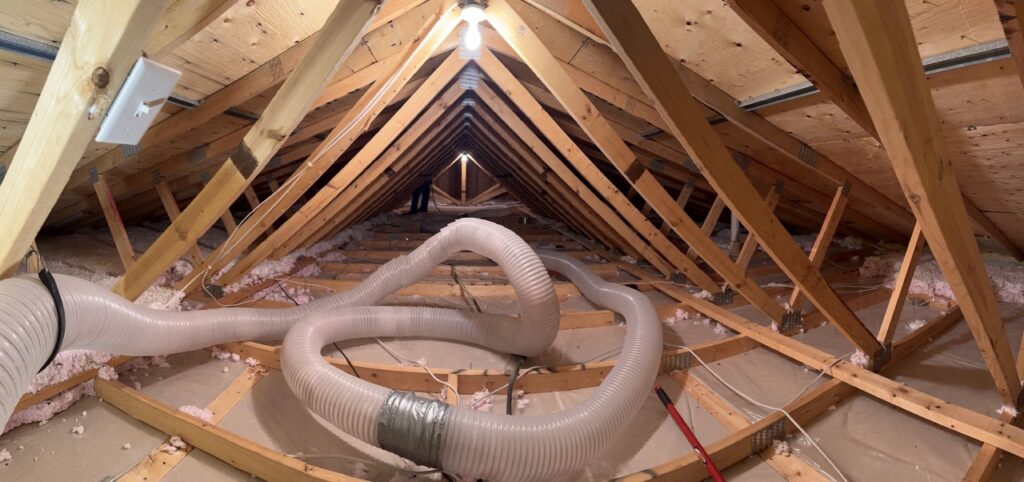
Attic insulation removal is the process of clearing out old, damaged, or contaminated insulation so your attic can be properly cleaned, sealed, and re-insulated. Depending on what’s up there, that means vacuuming out blown-in material or hauling out batts by hand, then bagging and disposing of it at a proper facility.
It isn’t busywork or an upsell. When insulation is wet, moldy, pest-soiled, or simply worn out, removing it is the only way to fix the underlying problem instead of burying it. Done right, removal sets the stage for insulation that actually performs.
This isn’t a simple weekend DIY project. Between the dust, debris, confined spaces, and potential exposure to mold, rodent contamination, or damaged insulation materials, the job can quickly become overwhelming. Removing insulation properly requires specialized equipment, proper safety precautions, and a thorough cleanup process.
Signs You Need Attic Insulation Removal
Not every attic needs a full tear-out. But there are a handful of situations where covering up the old stuff just buries the problem — and you’ll pay for it later. Here are the signs it’s time to remove old insulation.
Rodents, bats, or other unwelcome tenants
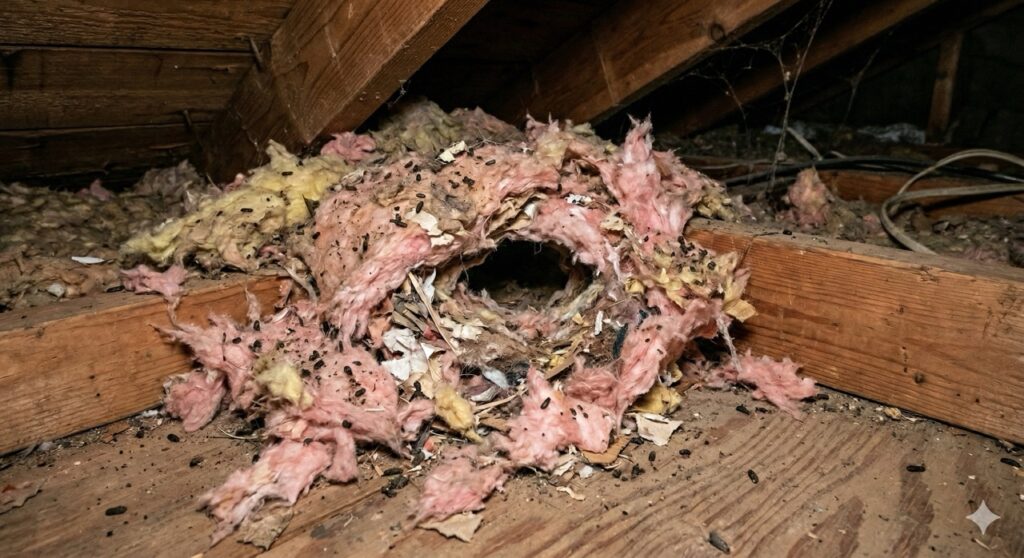
Attics are prime real estate for mice, squirrels, and bats. Where they nest, they leave droppings, urine, and shredded material behind — and that contamination doesn’t go away when the critters do. This is a genuine health issue, not just a gross one. Rodent and bat waste can carry bacteria and airborne pathogens, and every time your furnace or AC kicks on, your HVAC system can pull that contaminated air down into your living space.
You cannot fix a contaminated attic by laying fresh insulation on top of it. That just seals the mess in and keeps you breathing it. The insulation has to come out, the space has to be cleaned and disinfected, and then you start fresh.
Moisture damage and mold
Insulation and water do not mix. A roof leak, poor ventilation, or condensation from air leaks below can leave your insulation soaking up moisture like a sponge. Once it’s wet, it compresses, loses its loft, and stops performing — the R-value you paid for is basically gone. Worse, damp insulation becomes a breeding ground for mold and mildew, which hurts your indoor air quality and can be a real problem for anyone in the house with asthma or allergies.
Wet, moldy insulation needs to come out, and the moisture source needs to be corrected — otherwise you’re just setting up the new insulation to fail the same way.
Fire and smoke damage
If you’ve had a fire — even a small one — your insulation almost always needs to come out. Smoke and soot work their way deep into fiberglass and cellulose and stay there, leaving an odor that can linger for years and is nearly impossible to remove once it’s settled in. And it isn’t just a smell problem: smoke-saturated insulation can release fine particles that your HVAC system pulls through the rest of the house, dragging down your air quality long after the fire is out.
A few things make fire damage especially important to address. Heat can degrade insulation fibers and ruin their performance even where there’s no visible char. Partially burned material can hide smoldering embers. And because water is used to put fires out, fire-damaged attics often have a moisture and mold problem layered on top of the smoke. Insulation that looks untouched can still be compromised if smoke reached it, so the only reliable fix is to remove the old insulation, deodorize the space, and start fresh. If you’ve had a fire, wait until it’s safe to enter and then have the attic assessed.
Air leaks and a failing vapor barrier
A lot of attic problems in our area come down to air leakage and missing or failing vapor barriers — not just “not enough insulation.” Warm, moist air from your home sneaks up through gaps in the attic floor, hits the cold underside of your roof, and condenses. That’s the same cycle that fuels ice dams and feeds moisture problems all winter long. You can’t properly air-seal an attic floor with old insulation in the way, so to fix those leaks at the source, the existing insulation usually has to be cleared out first.
You’re upgrading to spray foam
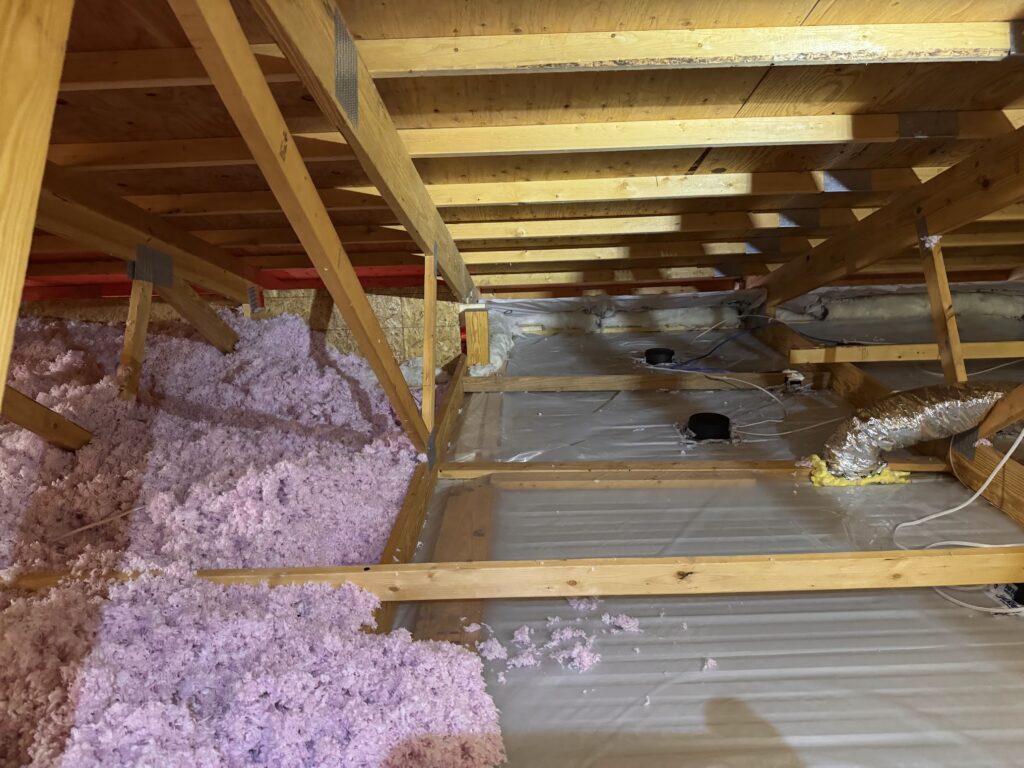
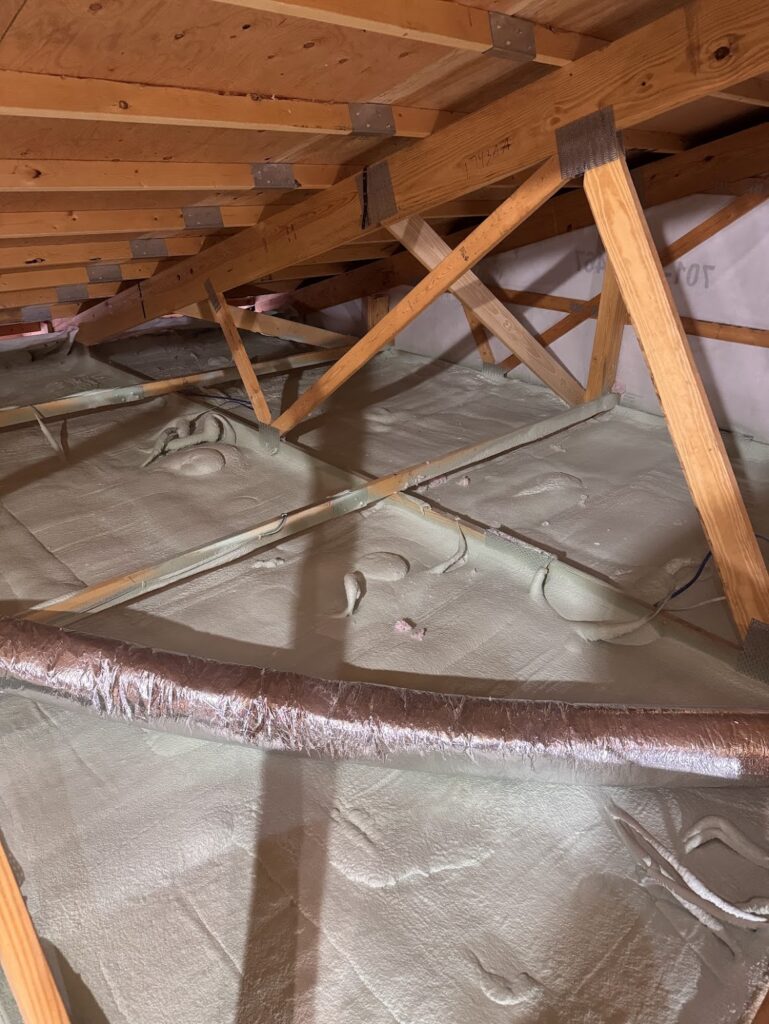
If you’re switching to a spray foam roof deck, removing the old insulation on the attic floor is part of the deal. Spray foam works creates a seamless air and vapor barrier, and old fiberglass or cellulose gets in the way of how the whole system is supposed to breathe and perform. To do it right, the old material comes out first.
Age, settling, and general wear
Insulation doesn’t really “expire” from age alone — but it does settle, shift, and flatten over the years, and that costs you R-value. Blown-in materials in particular tend to compress and lose effectiveness over time. As a rough guide, fiberglass tends to perform well for about 15–20 years and cellulose for 20–30, though it’s the condition that matters more than the calendar. If your insulation is decades old, visibly flattened, dusty, or patchy, it may simply not be doing its job anymore.
Vermiculite (the one to never touch yourself)
If your home was built before the 1990s and you’ve got a grayish-brown, pebbly insulation in the attic, know that some vermiculite insulation contains asbestos. This material should be tested, not disturbed, and if it tests positive it must be handled by a licensed asbestos abatement company — not vacuumed out like ordinary insulation. If you suspect you have it, leave it alone and call a professional.
Why Insulation Removal Matters
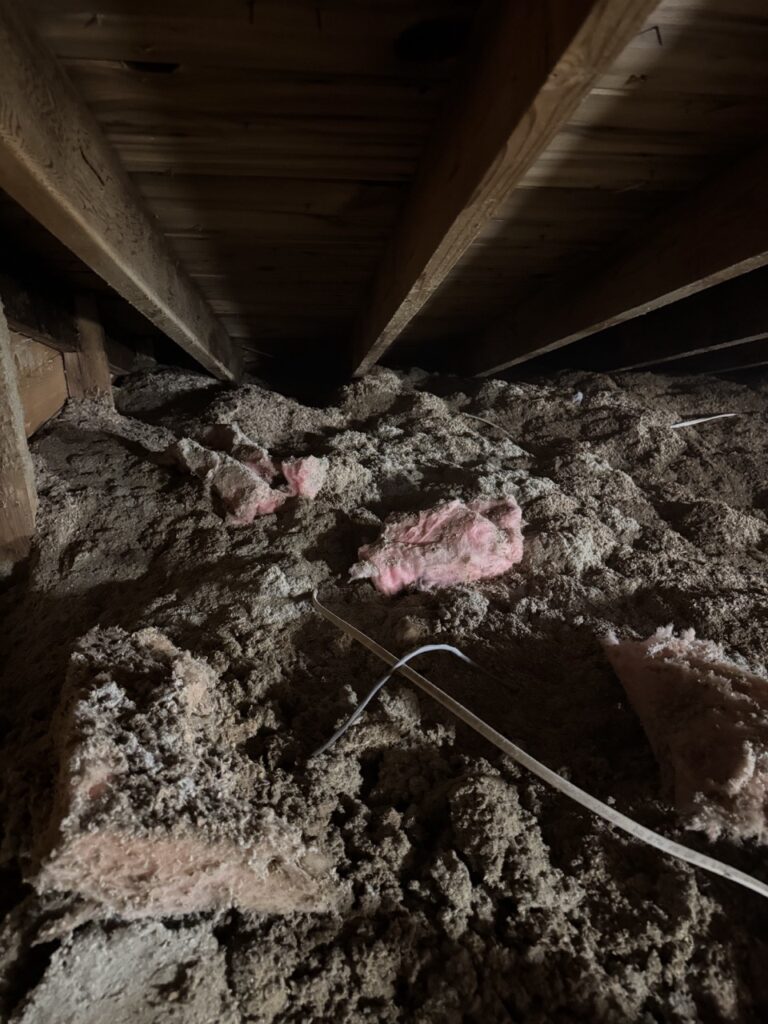
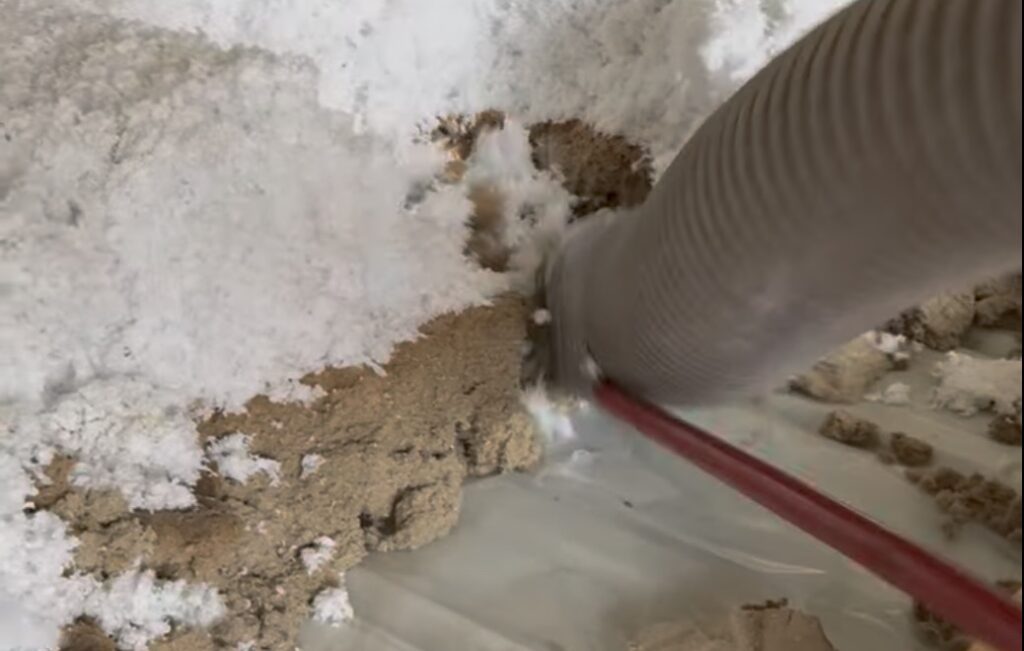
It’s tempting to look at insulation removal as an annoying extra step — like you’re throwing away an investment you already made. We get it. But here’s the honest math: if the insulation up there isn’t working, leaving it in place means your new insulation can’t work either. You’d be paying to insulate over a problem instead of fixing it.
Done right, removing old insulation and addressing the attic at the source pays you back:
- Lower energy bills. Your attic is where a huge share of your heating and cooling escapes. A properly sealed and insulated attic stops paying to heat the outdoors.
- A healthier home. Pulling out contaminated, moldy, or pest-soiled insulation means you’re not recirculating that air through your house every time the HVAC runs.
- Preventing ice dams and moisture headaches. Fixing the air leaks and ventilation behind the insulation tackles the actual cause of ice dams, instead of just treating the symptoms.
- Protecting the house itself. Moisture left unchecked doesn’t stay in the insulation. It moves into your drywall, your trusses, and your roof deck. The longer it goes, the more it costs to fix.
The longer a failing attic goes unaddressed, the more it costs — in utility bills, in damage, and eventually in repairs.
Your Insulation Removal Options
Once you know removal is on the table, here’s what it actually involves and what choices you have.
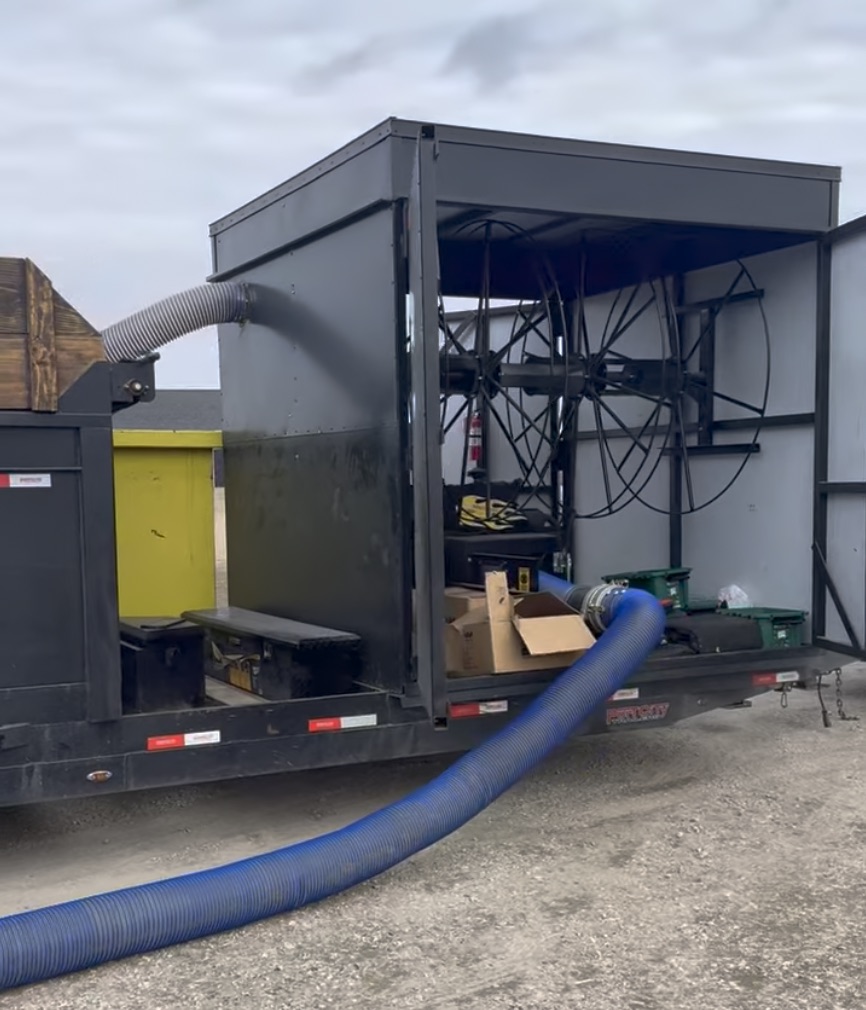
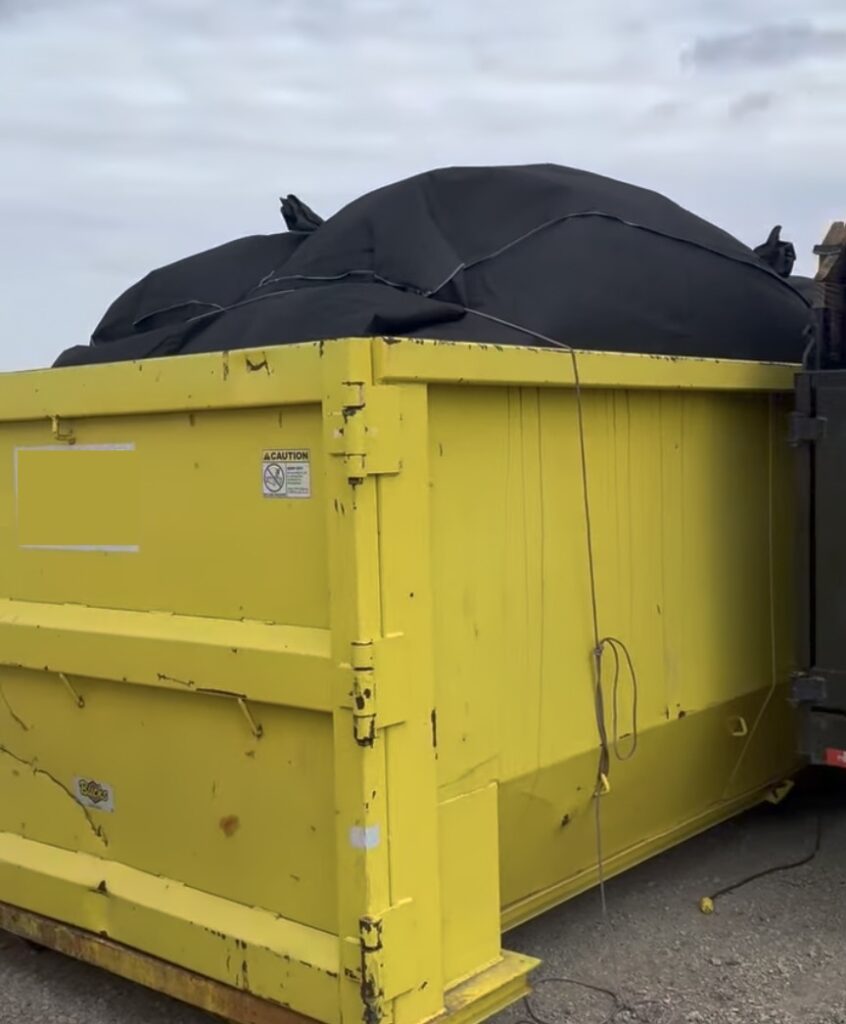
How it gets removed. Loose-fill and blown-in insulation removal (cellulose or fiberglass) is typically done with a high-powered commercial vacuum, with the material bagged for disposal. Batt insulation is usually pulled and hauled out by hand. Either way, contaminated material is bagged, removed, and disposed of at a proper facility — this is dusty, sometimes hazardous work, which is exactly why it’s a job for a professional insulation removal service rather than a shop vac and a weekend.
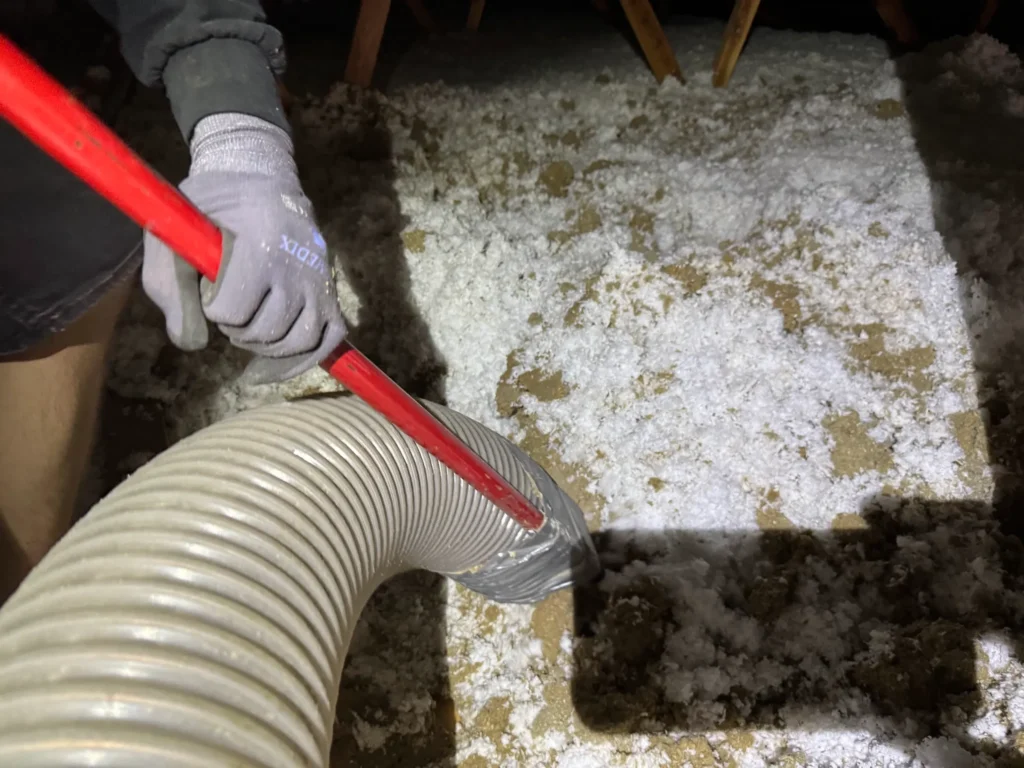
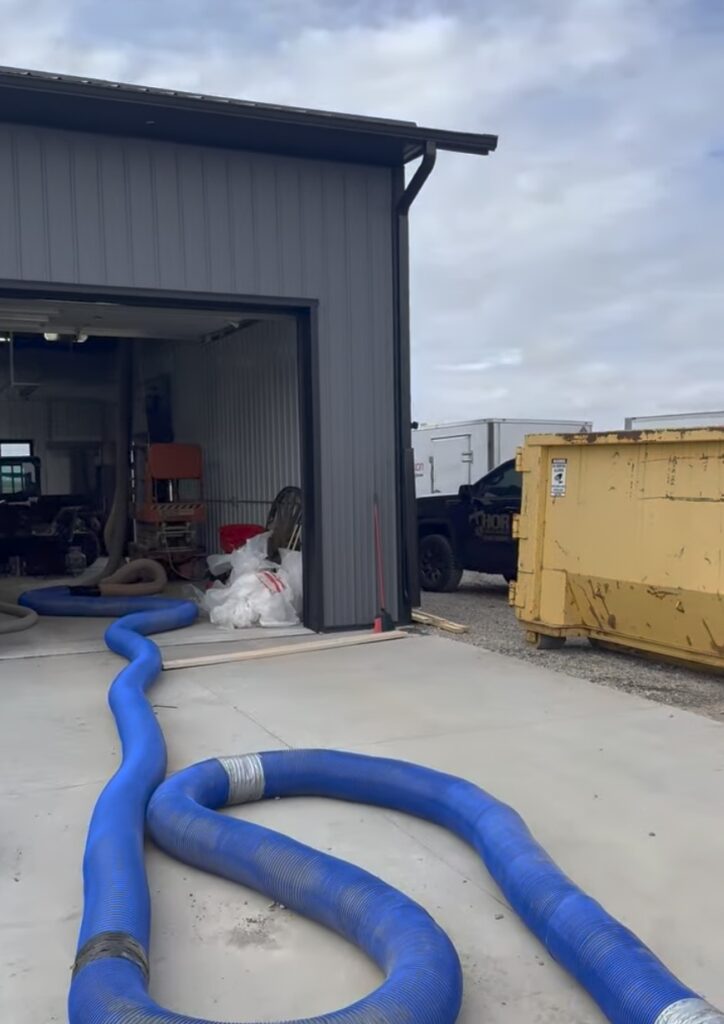
What goes back in. Once the space is clean and the underlying issues are corrected, you’ve got options for the new system:
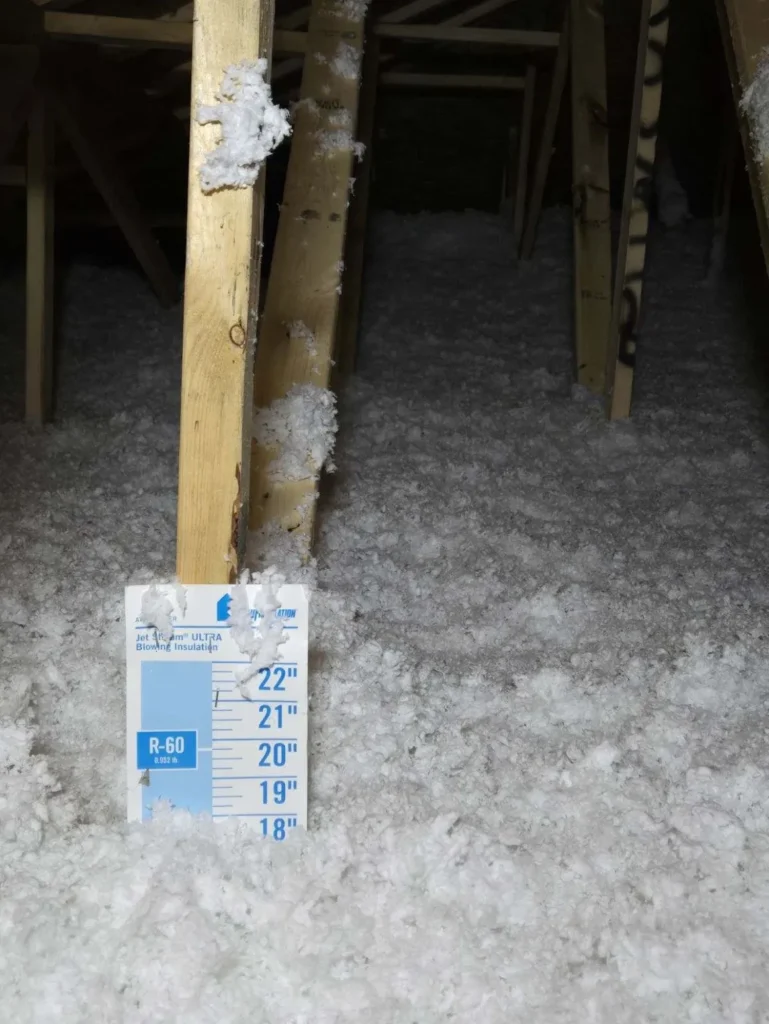
- Blown-in fiberglass insulation is a cost-effective way to get consistent coverage and a strong R-value across an attic floor.
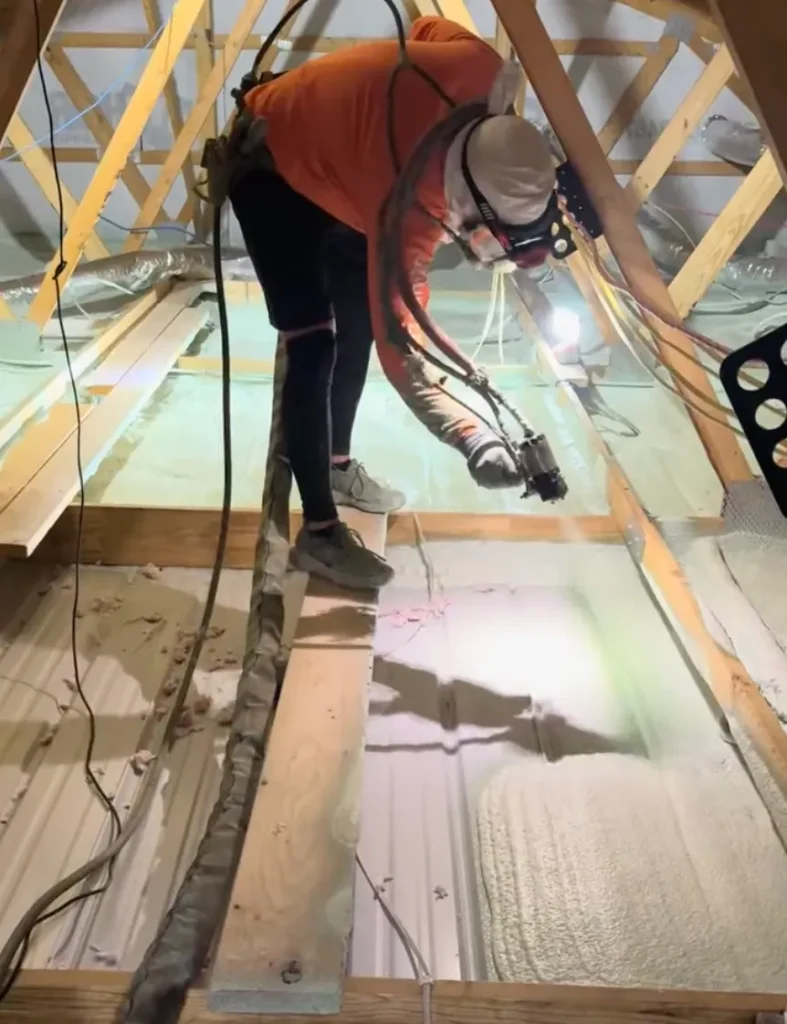
- Closed-cell spray foam creates a seamless air and vapor barrier with a high R-value and is especially well-suited to our northern climate — great for roof decks, vaulted ceilings, tight roof geometry, or attics where the HVAC lives in the attic space.
- A combination of the two is often the right answer, matched to how your specific attic is built.
The best choice depends on your home’s construction, your budget, and what we find during the inspection — there’s no one-size-fits-all answer.
Do You Always Need Full Insulation Removal?
No — and we’ll always tell you straight. Insulation generally doesn’t degrade from age alone, and plenty of attics just need a top-off or a ventilation correction rather than a full reset. The real questions are whether you have enough insulation, the right type, whether it’s taken on any moisture damage, and whether your ventilation and air sealing are doing their jobs.
That’s exactly what an inspection answers. If all you need is a top-off, that’s what we’ll recommend. We won’t sell you an insulation removal you don’t need.
Our Attic Insulation Removal Process
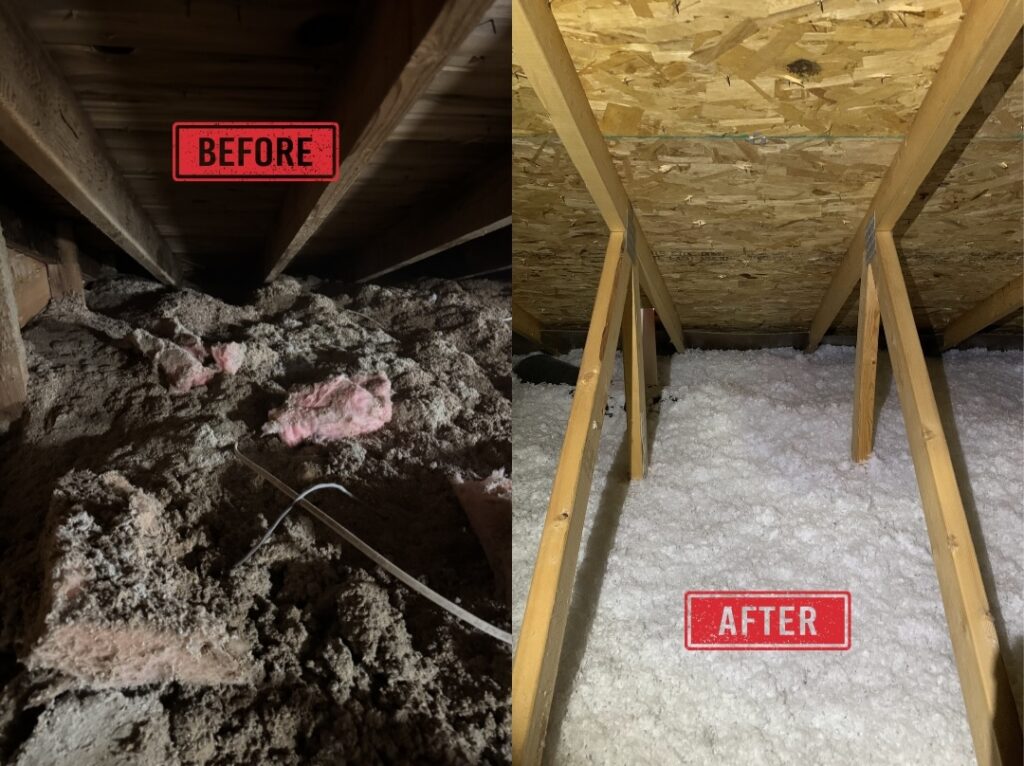
When removal is the right call, here’s what our Attic Refresh looks like, start to finish:
- Free attic inspection — we assess insulation condition and R-value, air and vapor barriers, ventilation, and any signs of moisture, mold, or animal intrusion.
- Remove the old insulation — we clear out and dispose of contaminated, damaged, or ineffective material so we can see and fix what’s underneath. In rodent or fire/smoke cases, we deodorize the space before anything new goes in.
- Restore ventilation — we install chutes to get proper airflow back, which is what prevents moisture buildup and ice dams in the first place.
- Seal air and vapor leaks — we address gaps and penetrations (often with spray foam) to control air movement and moisture at the source.
- Install the right insulation — the system matched to your attic, built for long-term performance.
- A more comfortable home — done right, once, for good.
Most attic insulation removal projects wrap up in one to two days depending on the size and complexity of the attic. We’ll give you a clear timeline before we start and we won’t leave any mess.
Attic Insulation Removal FAQs
How do I know if I need to remove my old insulation? Look for water stains, a musty smell, visible mold, rodent droppings or nests, flattened or patchy insulation, ice dams, and rooms that won’t hold temperature. Any of these is a reason to have your attic inspected. If the insulation is clean, dry, and simply a little thin, you may only need a top-off rather than a full removal.
Do I have to remove old insulation before adding new? Not always. If the existing insulation is clean and dry, you can often add over it. But if it’s wet, moldy, pest-contaminated, or you’re switching to spray foam, it needs to come out first so the new insulation can perform and you’re not sealing in a problem.
How much does attic insulation removal cost? It depends on your attic — the main factors are size, accessibility, the type of insulation, and whether there’s contamination or hazardous material like asbestos. Because every home is different, we give you a free, no-obligation quote for your specific attic, with no upfront cost and no billing until the work is complete.
How long does insulation removal take? Most attics take one to two days, depending on size, insulation type, and how easy the space is to access. Jobs involving contamination or hazardous materials can take longer.
Is it safe to remove attic insulation myself? It’s not recommended. Removal is dusty, physically demanding, and can expose you to mold, rodent waste, fiberglass particles, or asbestos. It also requires the right vacuum equipment and careful work on ceiling joists. A professional insulation removal service has the gear and protection to do it safely and completely.
What happens to the old insulation? It’s bagged and taken to a proper disposal facility. Contaminated or degraded material is disposed of safely; clean materials may sometimes be recycled.
Think You Might Need Insulation Removal? Get Answers Now
Energy loss doesn’t stop when the season changes, and neither do moisture or mold problems. The best time to deal with a failing attic is before it gets worse.
If you’re seeing the signs — ice dams, cold rooms, climbing bills, ceiling stains, or scratching overhead — let’s take a look. Our attic inspections are always free, with real answers and no pressure to commit to anything.
Request your free attic inspection today, or call us at (701) 373-4563.
Polar Insulation is a locally owned insulation company based in West Fargo, ND, providing attic insulation removal, replacement, and spray foam services across the Fargo-Moorhead area, central North Dakota, and the Minnesota Lakes Area within a 200-mile radius. Insulation done right, every time — that’s the Polar Advantage.